Have you ever styled a coffee table, shelf or console and thought:
Something just feels… off.
You move a vase. Add a candle. Remove a book. Put the book back.
And somehow, it still doesn’t look like those effortlessly styled interiors you keep saving.
There is one incredibly simple interior styling trick that can help:
the rule of three.
The rule of three is one of those decorating principles that sounds almost too simple to make a difference — but once you start noticing it, you’ll see it everywhere.
On coffee tables.
On bookshelves.
On console tables.
On kitchen counters.
Even in the way pillows, artwork and colors are arranged throughout a room.
And the best part?
You probably already have everything you need to use it.
What Is the Rule of Three in Interior Design?
The rule of three in interior design is the idea that objects often look more balanced and visually interesting when arranged in groups of three rather than perfectly symmetrical pairs.
Instead of placing two identical candlesticks next to each other, for example, you might style:
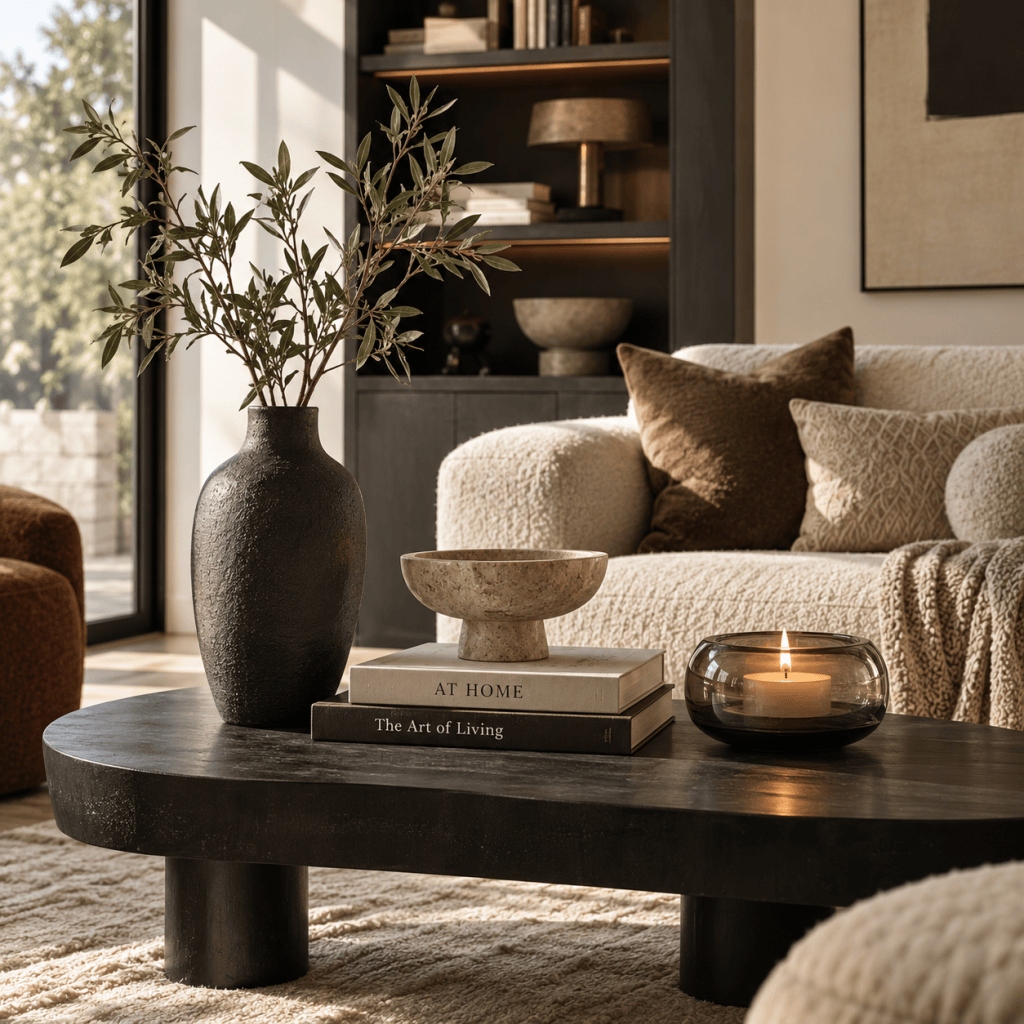
a tall vase + a stack of books + a small decorative bowl.
Three different objects.
Three different heights.
One balanced composition.
The idea is closely related to the broader rule of odds in interior design, where objects are grouped in odd numbers such as three, five or seven.
Odd-numbered arrangements tend to create more movement because your eye travels between the different objects instead of immediately dividing them into matching pairs.
But here’s the important part:
The rule of three isn’t really about putting three random objects together.
The magic happens when those three objects have something that connects them — while still being different enough to create contrast.
Why Does the Rule of Three Work?
Imagine three identical vases lined up perfectly beside each other.
Technically, that’s a group of three.
But it may still look flat.
Now imagine:
a tall ceramic vase with branches,
a medium stack of coffee table books,
and a small sculptural bowl.
Suddenly, your eye moves through the arrangement.
That’s because great interior styling is often about creating visual rhythm.
The objects don’t need to match.
In fact, it’s usually better when they don’t.
Instead, try varying:
- height
- shape
- scale
- texture
- material
- color
The result feels intentional without looking overly staged.
The Easiest Rule of Three Formula
If you remember only one thing from this guide, make it this:
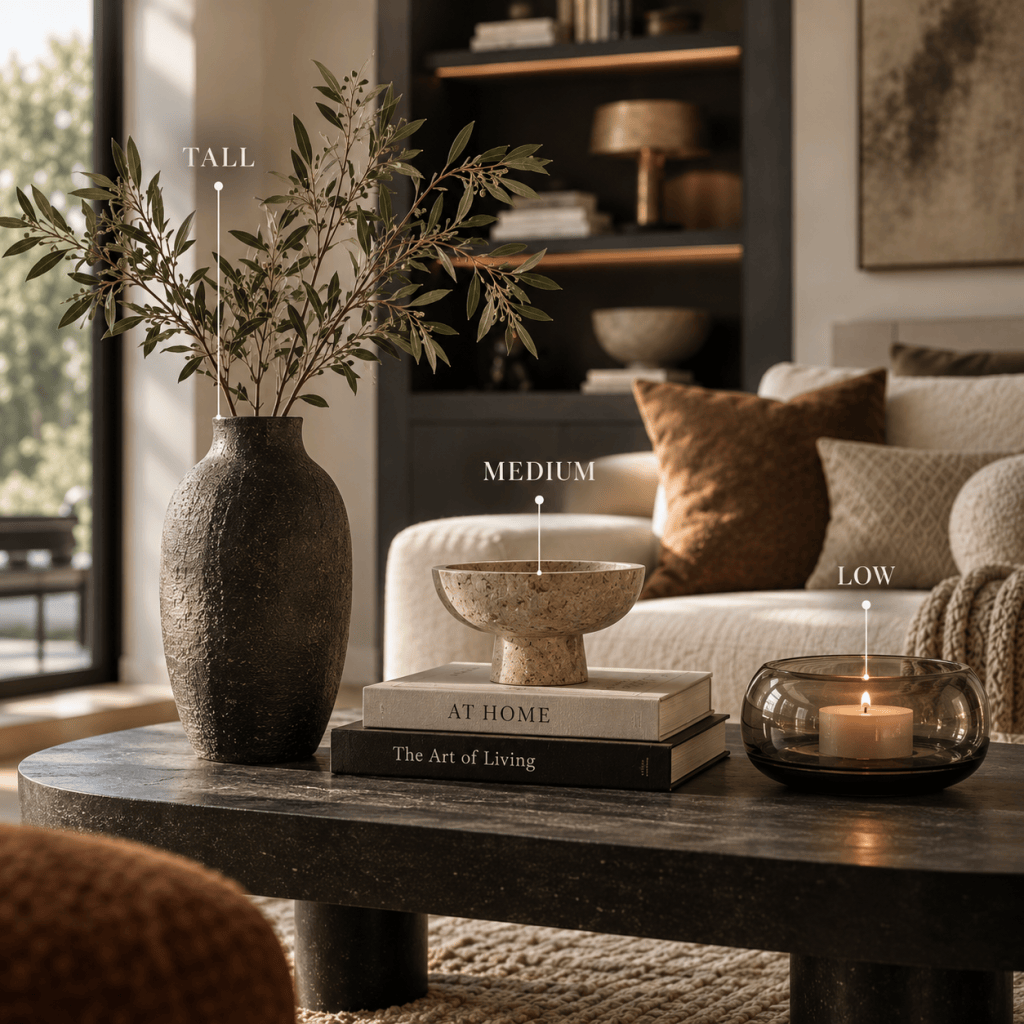
TALL + MEDIUM + LOW
This is probably the easiest formula for styling decor.
For example:
Tall: vase with branches
Medium: candle or decorative object
Low: stack of books or decorative bowl
That’s it.
You can use this formula almost anywhere in your home.
The different heights create a loose visual triangle, giving your eye somewhere to travel instead of seeing three objects sitting in a straight line.
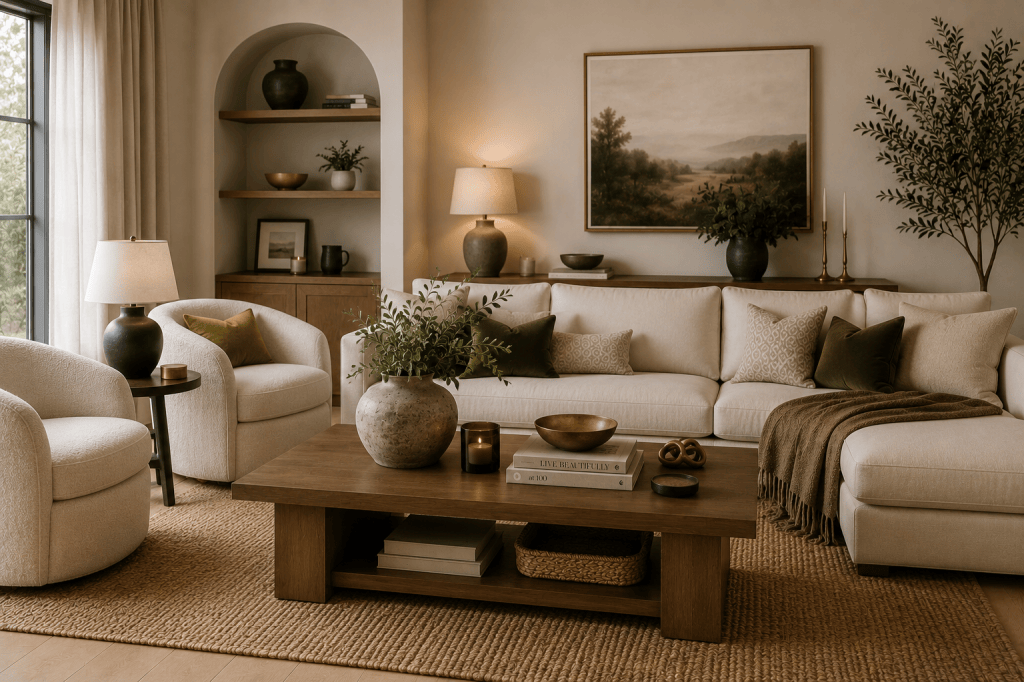
How to Use the Rule of Three on a Coffee Table
Coffee tables are one of the easiest places to practice the rule of three in decorating.
Instead of covering the entire surface with lots of small accessories, divide your styling into three visual elements.
For example:
1. Something organic
A vase with greenery, flowers or branches.
2. Something horizontal
A stack of beautiful coffee table books.
3. Something sculptural
A candle, decorative bowl or interesting object.
Together, these three elements create variety in height, shape and texture.
And remember — they don’t need to sit in a perfect row.
Allow the pieces to overlap slightly or sit at different depths on the table.
This creates a more relaxed, collected look.
Casa Nore Tip
If your coffee table is large, think of the table as three zones rather than limiting yourself to exactly three objects.
One zone might contain a vase.
Another might contain two stacked books with a decorative object on top.
The third might contain a candle or bowl.
You’re still creating three visual groupings without making the table feel empty.
How to Use the Rule of Three on Shelves
Bookshelf styling can quickly go in one of two directions:
too empty…
or way too cluttered.
The rule of three gives you an easy starting point.
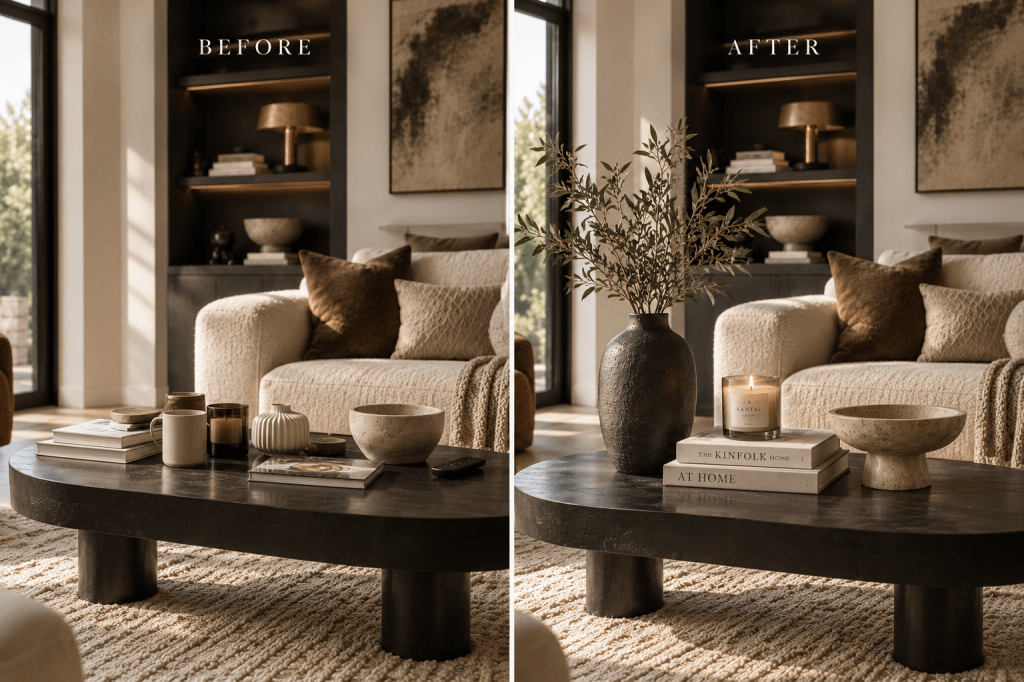
Try grouping three objects together while varying their heights and shapes.
For example:
a framed print + a small ceramic vase + two stacked books
or:
a tall vase + a sculptural object + a small bowl
But don’t repeat exactly the same formula on every shelf.
One shelf might have three objects.
Another might feature one large statement piece.
Another might contain books with a small decorative object.
This variation prevents your shelves from looking overly styled or repetitive.
And most importantly:
leave some empty space.
You don’t need to fill every inch of a bookshelf.
Negative space allows your favorite pieces to stand out and can make the entire display feel more elevated.
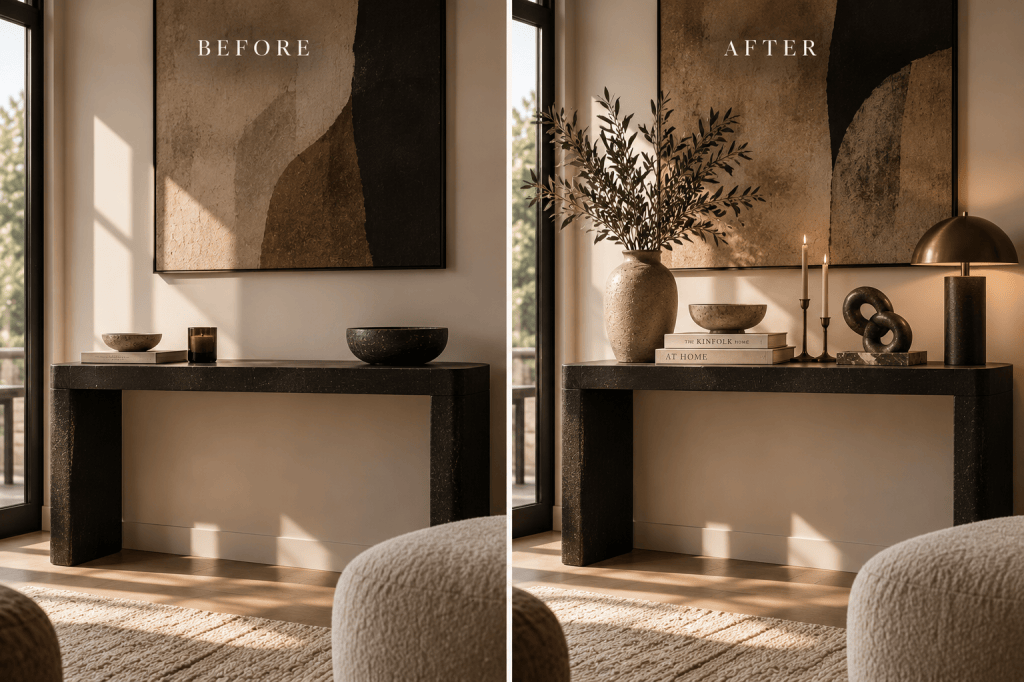
How to Use the Rule of Three on a Console Table
A console table is another perfect place to use this interior styling trick.
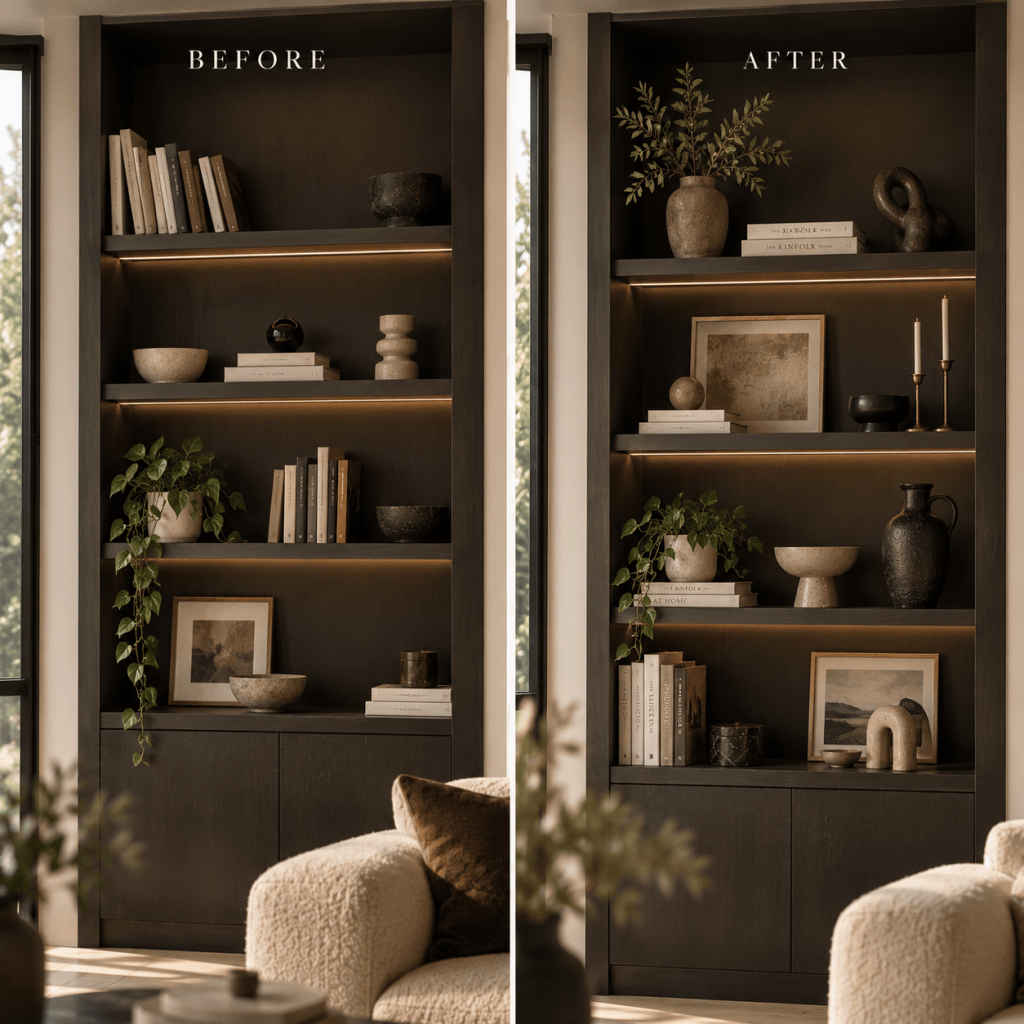
Start with one larger visual anchor.
This might be:
a lamp,
a tall vase,
a large mirror,
or artwork.
Then add two smaller elements to balance it.
For example:
lamp + books + decorative bowl
or:
large vase + framed photo + candle
Again, vary the heights.
One of the most common home decorating mistakes is placing several accessories of almost exactly the same height across a surface.
Instead, create movement.
Tall.
Medium.
Low.
Your console will immediately feel more intentionally styled.
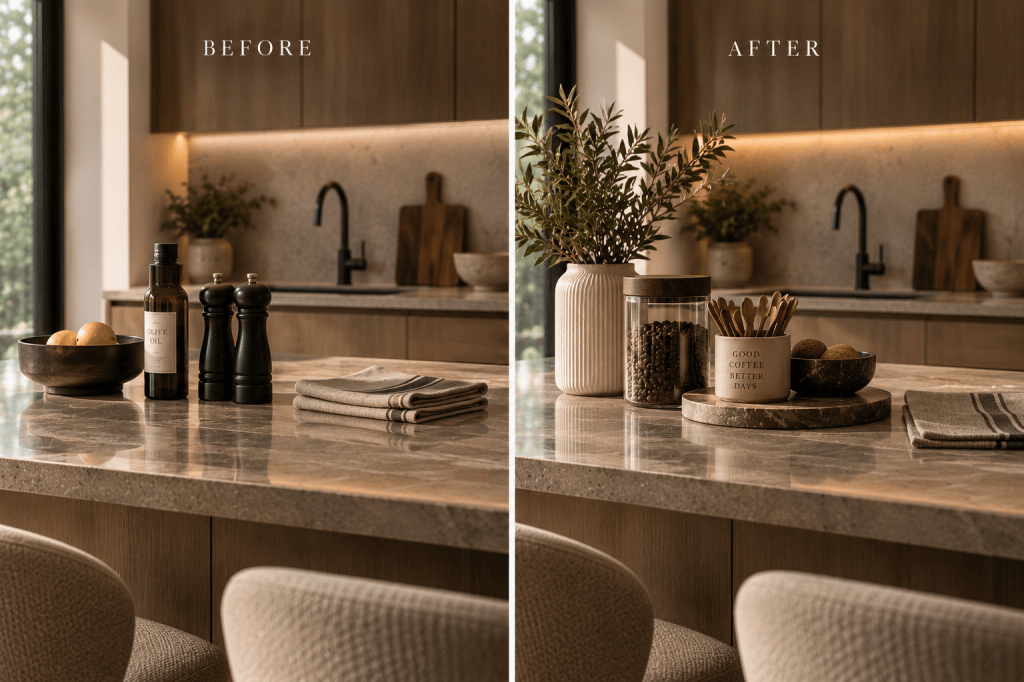
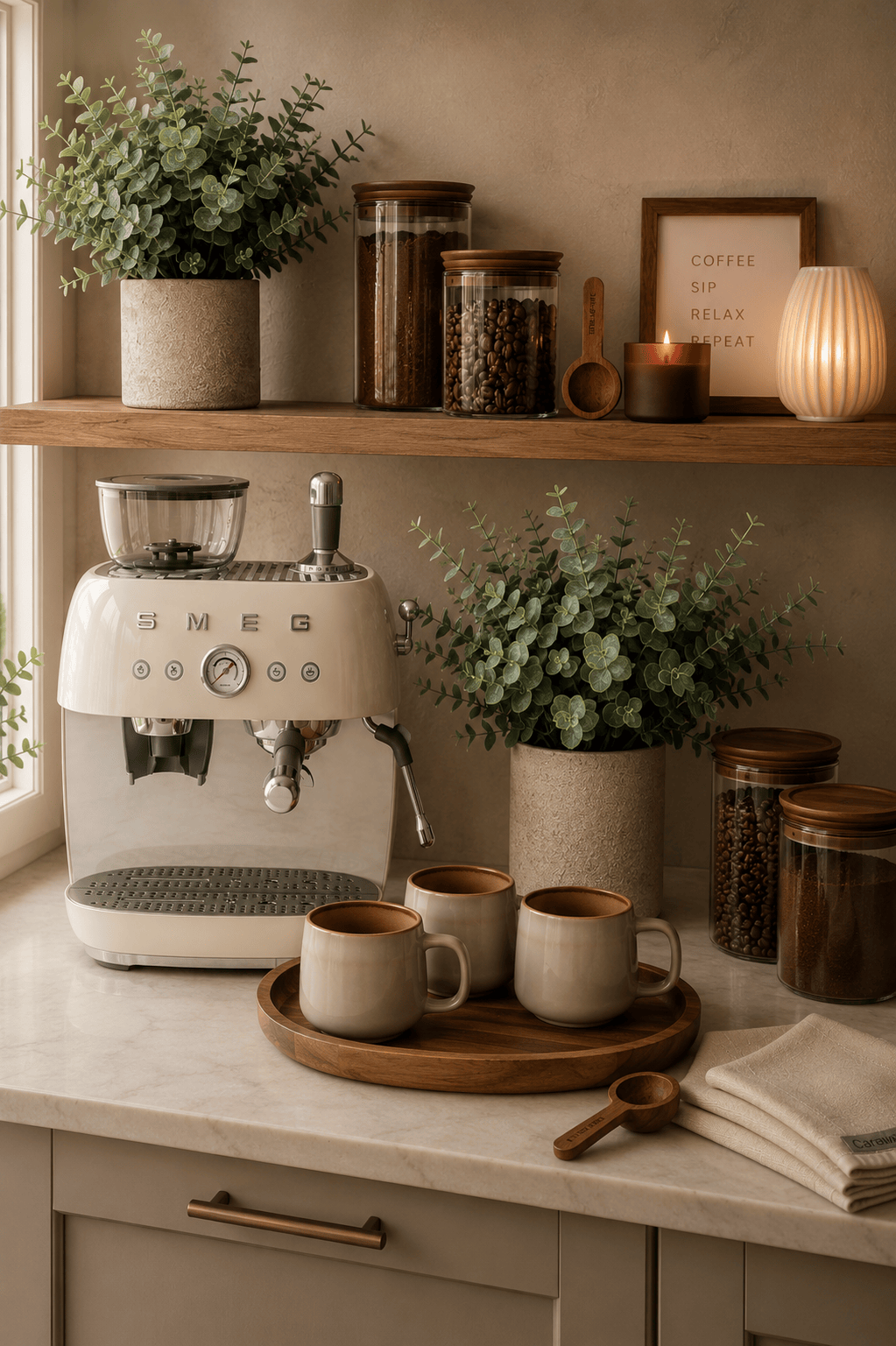
How to Use the Rule of Three on a Kitchen Counter
Yes — the rule of three works in the kitchen too.
And it can be especially useful if you want your kitchen counters to look styled without becoming cluttered.
Try grouping everyday items into one intentional vignette.
For example:
wooden cutting board + ceramic utensil holder + small plant
or:
coffee machine + jar of coffee beans + stack of mugs
Instead of spreading small objects across the entire countertop, grouping them together makes the space feel calmer and more organized.
This is especially useful when styling a coffee corner or coffee bar.
A tray can also visually connect the three elements and make the arrangement feel like one intentional group.
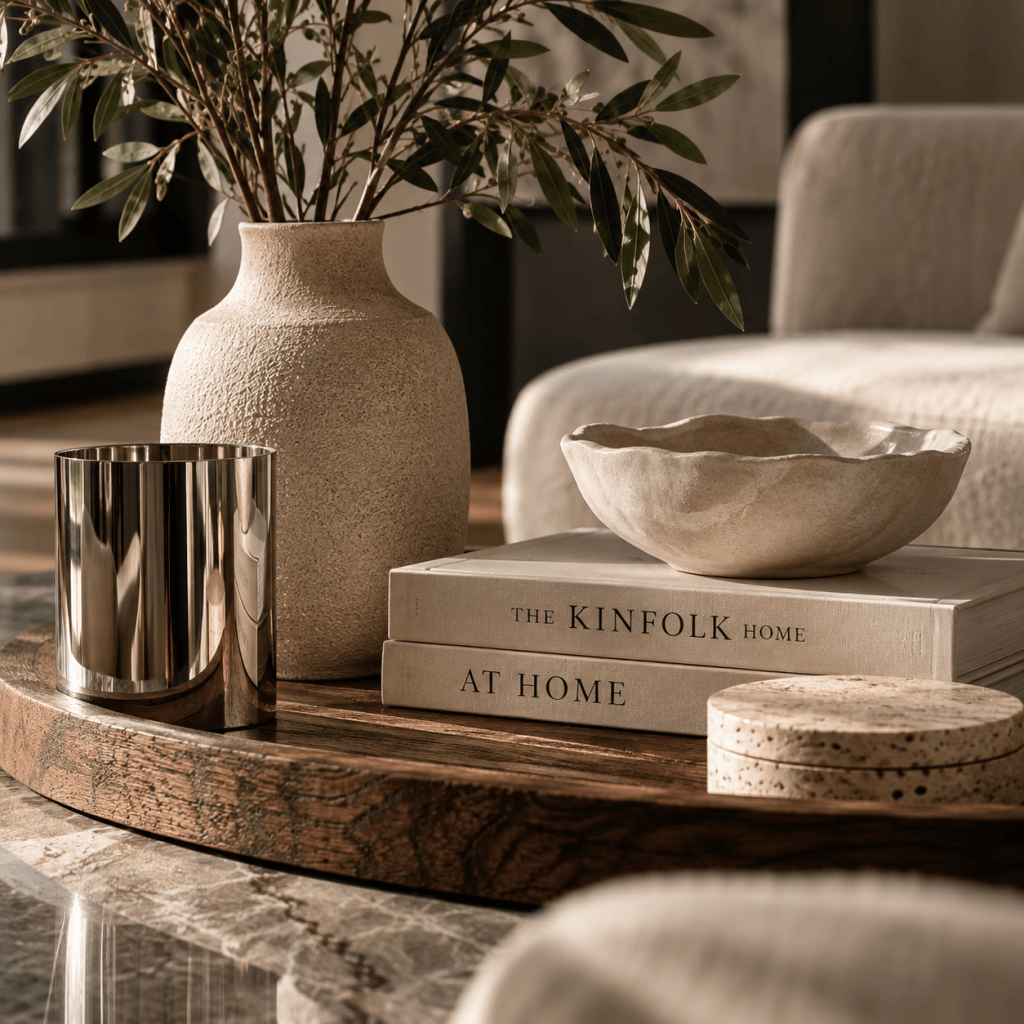
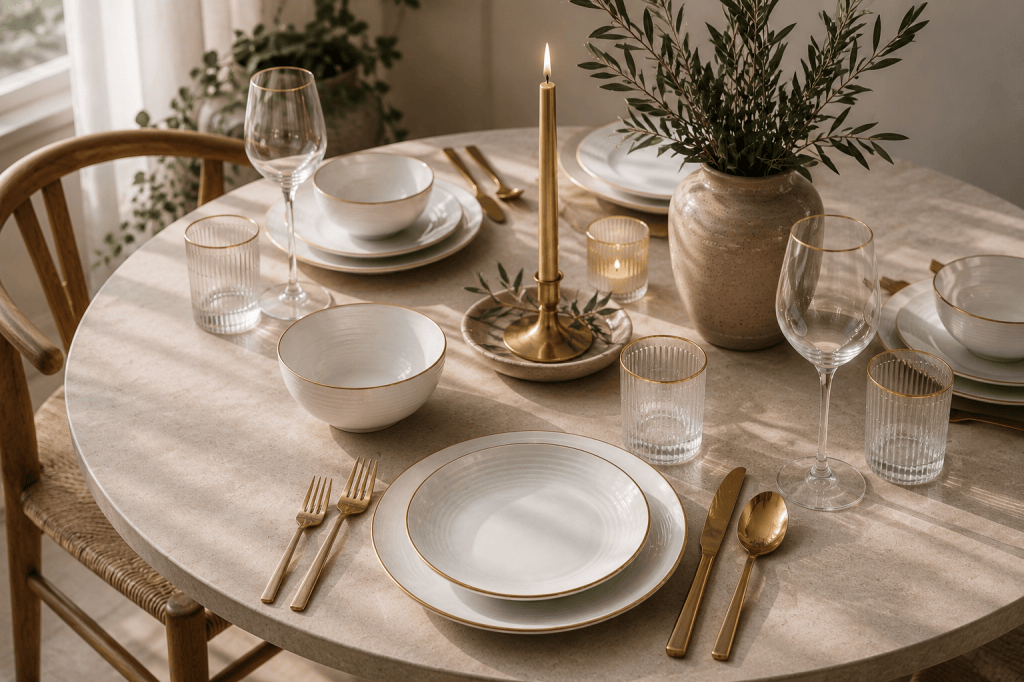
Use Three Different Textures
The rule of three doesn’t only apply to objects.
You can also use it when mixing materials and textures.
For example:
wood + glass + metal
or:
linen + ceramic + warm wood
or:
chrome + stone + textured fabric
Combining three different textures creates depth without making the space feel chaotic.
This is one reason beautifully styled neutral interiors rarely feel completely flat.
Even when the color palette is simple, the textures are doing the work.
A cream sofa might sit beside a dark wooden table, a glossy ceramic lamp and a soft linen curtain.
The colors are quiet.
The materials create interest.
Use the Rule of Three With Color
You can also apply the same idea to your color palette.
Instead of introducing lots of unrelated colors, think about three main tones:
a dominant color
a supporting color
an accent color
For example:
warm cream
- natural wood
- olive green
Or:
soft beige
- dark brown
- brass
This doesn’t mean your entire home can only contain three colors.
Think of it as a simple framework for creating a room that feels connected.
Repeating your accent color a few times throughout the space can make everything feel much more intentional.
What About Pillows?
The rule of three works beautifully with pillows too.
Instead of arranging perfectly matching pillows on both sides of your sofa, try creating slightly more relaxed groupings.
For example:
a large neutral pillow,
a smaller textured pillow,
and one accent pillow.
They can differ in size, pattern and texture while sharing a similar color palette.
The result feels layered and collected rather than like a matching furniture showroom.
The same principle can work beautifully on a bed.
The Rule of Three Doesn’t Mean Everything Must Come in Threes
This is important.
The rule of three is a styling guideline — not a decorating law.
You don’t need to walk around your house putting exactly three objects on every surface.
Sometimes two oversized objects look perfect.
Sometimes one beautiful statement vase is enough.
And on larger surfaces, groups of five or seven can work beautifully too.
The broader idea is sometimes called the rule of odds: odd-numbered arrangements can create a more dynamic composition than perfectly even groupings.
So instead of asking:
“Do I have exactly three objects?”
ask:
“Does this arrangement have balance, variation and room to breathe?”
That’s much more useful.
The Biggest Rule of Three Mistake
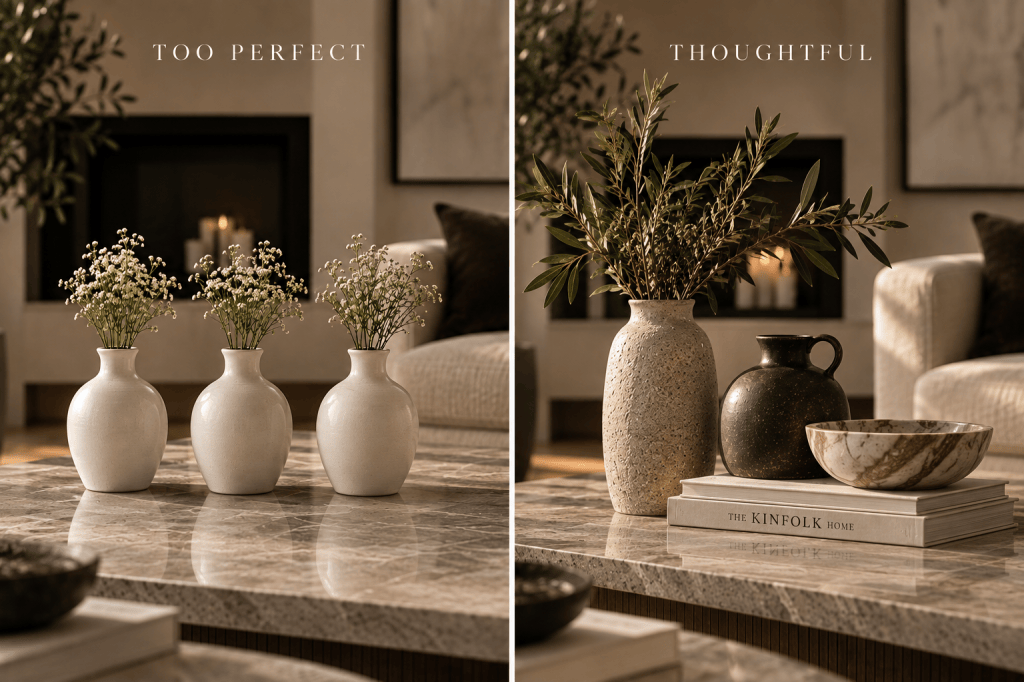
Ironically, one of the easiest ways to get the rule of three wrong is making the arrangement too perfect.
Three matching vases.
Perfectly spaced.
Exactly the same height.
That technically follows the number three — but misses the point.
Instead, create contrast.
Try:
one tall + one medium + one low
one smooth + one textured + one organic
one large + one medium + one small
The objects should feel related, but they shouldn’t look like they came packaged together as a set.
That’s what creates the relaxed, collected look that makes a home feel personal.
Try This 5-Minute Styling Challenge
Choose one surface in your home that has never felt quite right.
Maybe it’s your coffee table.
Your entryway console.
A bookshelf.
Your bedside table.
Remove everything from it.
Then choose just three elements:
1. Something tall
2. Something medium
3. Something low
Arrange them at slightly different depths rather than in one straight line.
Then step back.
You might be surprised by how much more intentional the entire space feels — without buying a single new piece of decor.
The Simplest Styling Tricks Are Often the Best
Beautiful interior styling doesn’t always require more decor.
Sometimes it simply requires arranging what you already own differently.
The rule of three is such a useful interior design trick because it gives you structure without making your home feel overly designed.
Use it to create balance.
Vary your heights.
Mix textures.
Leave some breathing room.
And remember that the goal isn’t perfection.
It’s creating a home that feels collected, considered and personal.
If you’re looking for more simple ways to elevate your space, read 7 Things That Make Your Home Look Cheap (And What to Do Instead) next for more easy interior styling ideas.
Until next time, create a home that feels like you.
Love,
Casa Nore ♡



Leave a Reply