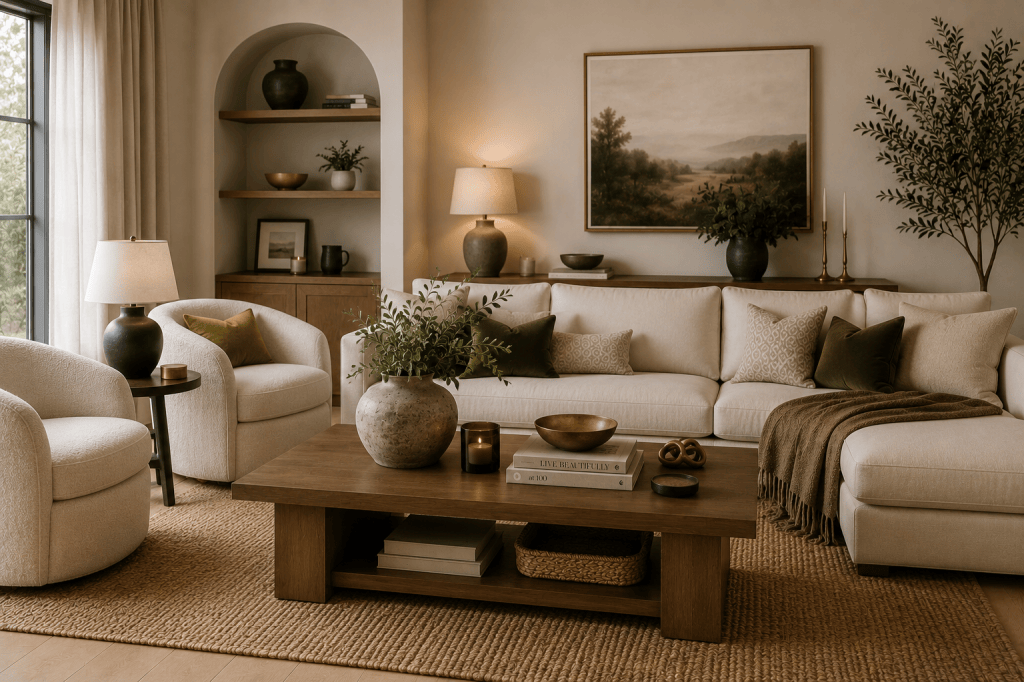
Creating a beautiful home isn’t always about spending more money. In fact, some of the most expensive-looking interiors aren’t filled with designer furniture at all.
What makes them feel elevated is how everything is styled together.
The right proportions, lighting, textures and finishing touches can completely transform a room — while a few common interior design mistakes can make even beautiful furniture feel less intentional.
If you’ve been looking for simple home decor ideas or wondering how to make your home look more expensive without spending a fortune, start with these seven styling mistakes.
The good news? Most of them are surprisingly easy to fix.
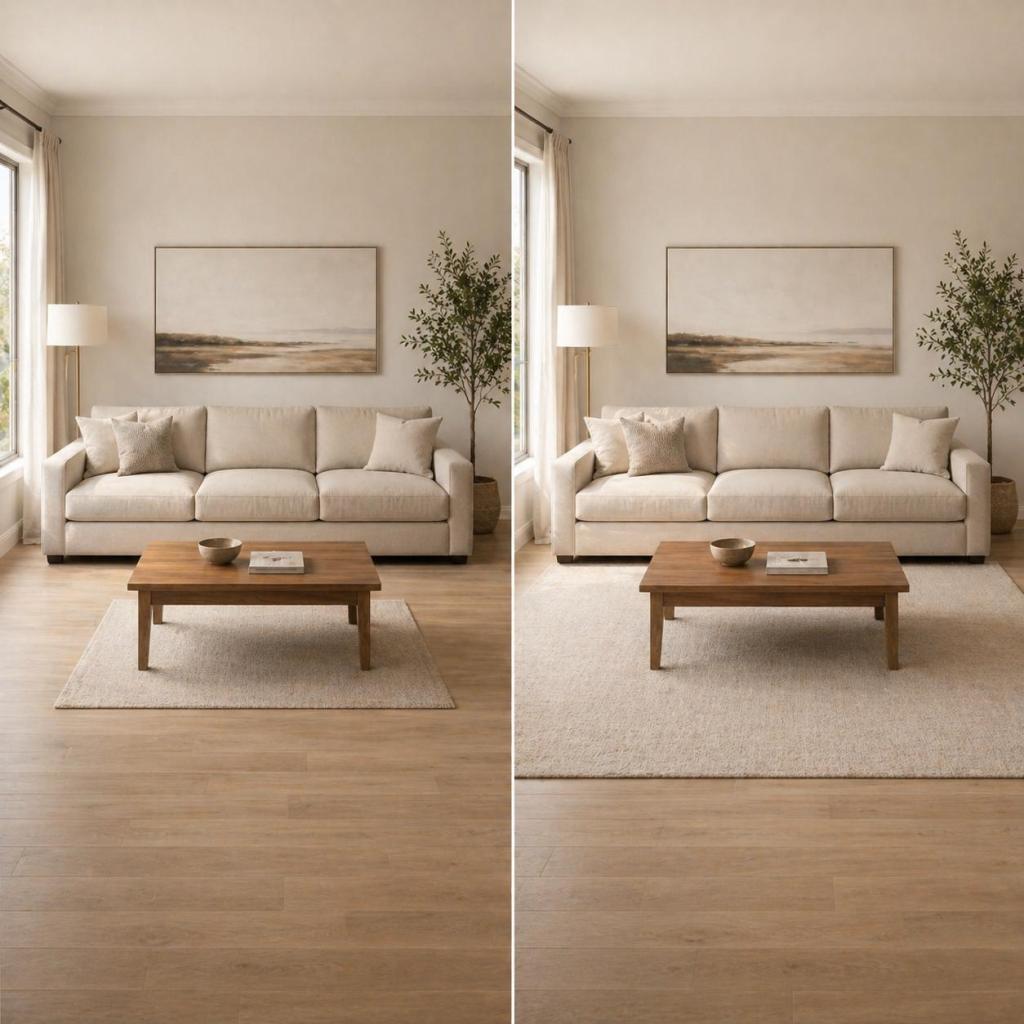
1. Your Rug Is Too Small
One of the most common living room decorating mistakes is choosing a rug that’s too small for the space.
A small rug floating underneath the coffee table can make the furniture feel disconnected and the entire room appear smaller.
Instead, think of your rug as the foundation that visually connects your furniture.
What to do instead
In a living room, choose a rug large enough for at least the front legs of your sofa and chairs to sit on it. In larger rooms, placing all of the furniture legs on the rug can create an even more cohesive look.
The same idea applies in the bedroom. A larger area rug extending beyond the sides of the bed usually feels much more luxurious than a small rug placed only at the foot of it.
When you’re deciding between two rug sizes, the larger option will often create the more polished result.
A properly sized rug instantly makes a room feel more intentional, balanced and expensive.
Casa Nore Tip: Before ordering a rug online, mark its dimensions on your floor with painter’s tape. You’ll immediately see whether the scale works with your furniture.
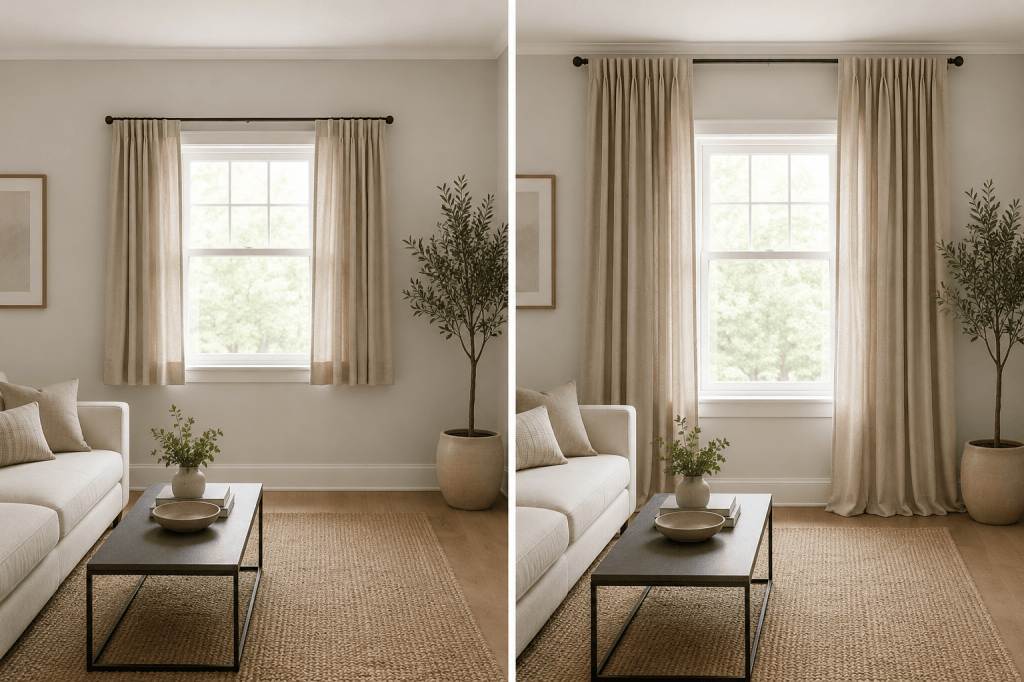
2. Your Curtains Are Hanging Too Low
Curtains can completely change the proportions of a room.
One of the easiest ways to accidentally make a space feel smaller is hanging the curtain rod directly above the window frame and choosing curtains that stop too far above the floor.
Instead, use your curtains to visually stretch the room.
What to do instead
Hang your curtain rod higher and wider than the actual window.
Placing the rod closer to the ceiling draws the eye upward and creates the illusion of taller ceilings. Extending it beyond the window frame also allows more natural light into the room when the curtains are open.
Whenever possible, choose floor-length curtains.
The fabric should either lightly touch the floor or hover just above it.
This simple curtain styling trick can make even an ordinary room feel taller, softer and more luxurious.
For an elevated look, consider linen-look curtains, textured neutrals or soft fabrics that add movement without overwhelming the space.
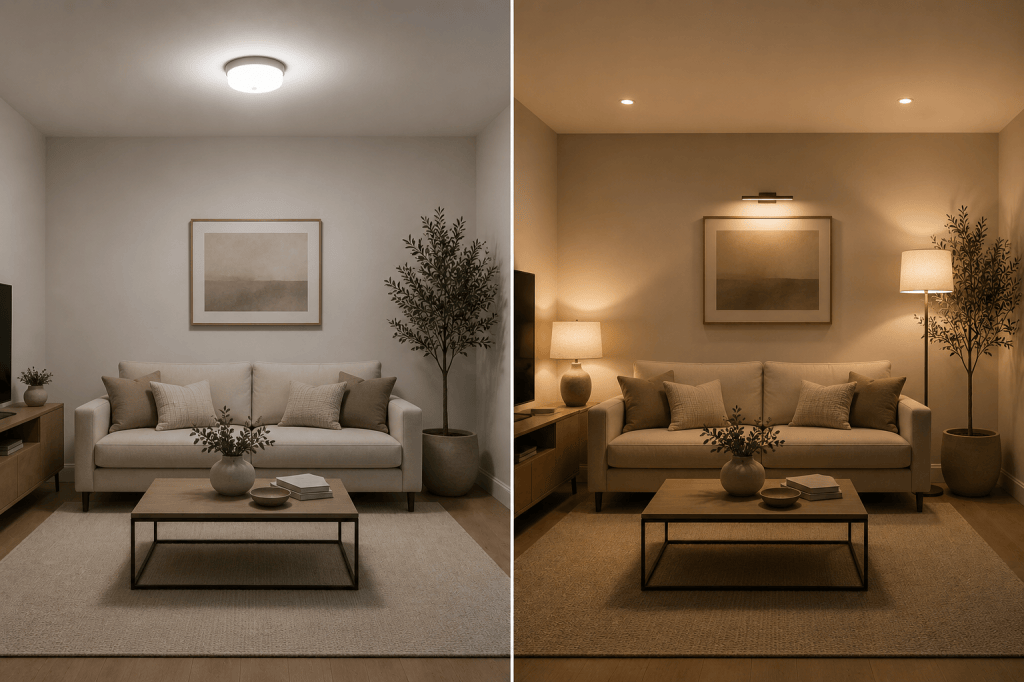
3. You’re Relying on One Overhead Light
Beautiful interiors rarely rely on one bright ceiling light.
Lighting is one of the most powerful elements in interior design because it affects not only how your home looks, but how it feels.
A single overhead light can make a room feel flat and harsh.
Layered lighting, on the other hand, creates depth, warmth and atmosphere — and remains one of the most consistently recommended ways to make a room feel more considered and inviting.
What to do instead
Think about lighting in three layers:
Ambient lighting — your main source of light, such as ceiling fixtures or pendants.
Task lighting — functional lighting such as reading lamps, kitchen lighting or desk lamps.
Accent lighting — smaller lamps, wall sconces or decorative lighting that creates atmosphere.
Instead of buying another piece of decor, try adding a beautiful table lamp to a dark corner or a floor lamp beside your sofa.
Warm, softly diffused lighting can instantly make a living room or bedroom feel cozier and more expensive.
And don’t underestimate the lamp itself. Sculptural lamps, oversized shades and interesting materials can double as decor.
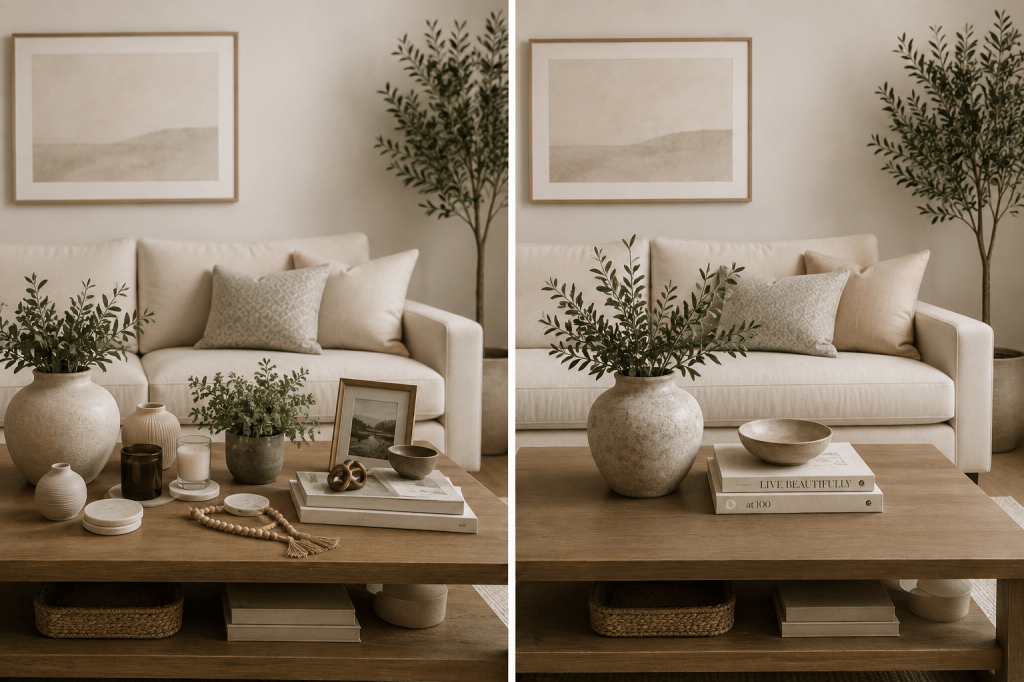
4. Every Surface Is Covered With Small Decor
Decorating doesn’t mean filling every empty space.
When every shelf, table and countertop is covered with small objects, the eye doesn’t know where to rest. Even expensive accessories can start to look like clutter.
One of the easiest ways to create an elevated, curated home is to simply use fewer pieces.
What to do instead
Try replacing several small accessories with one or two larger statement pieces.
Instead of five tiny decorations on a console table, you might use:
a large ceramic vase,
a stack of beautiful books,
a sculptural bowl,
and one interesting object.
Leave some empty space around them.
That negative space is part of the design.
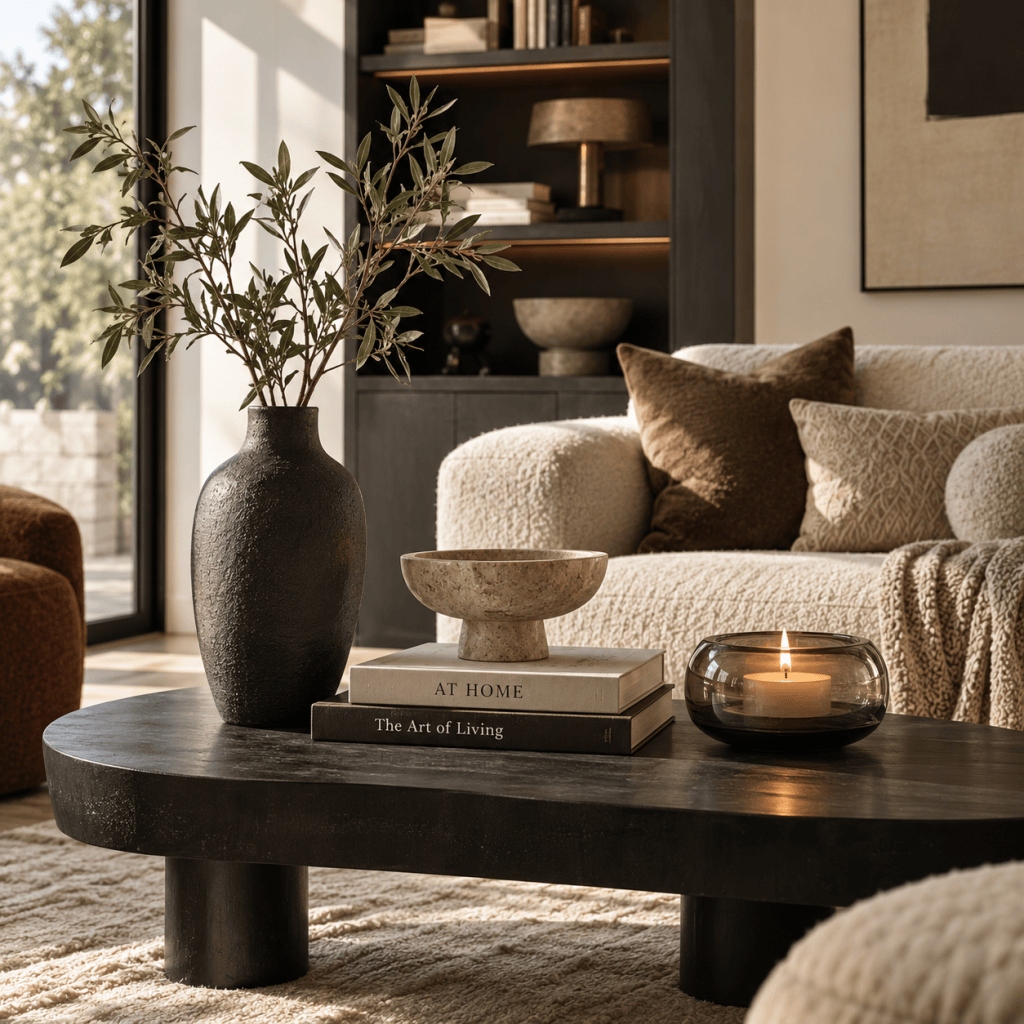
You can also use the rule of three when styling coffee tables, shelves and consoles. Grouping three objects with different heights, shapes or textures often creates a naturally balanced arrangement.
For example:
a tall vase + a stack of books + a small sculptural object.
Simple, but intentional.
5. Everything Matches Too Perfectly
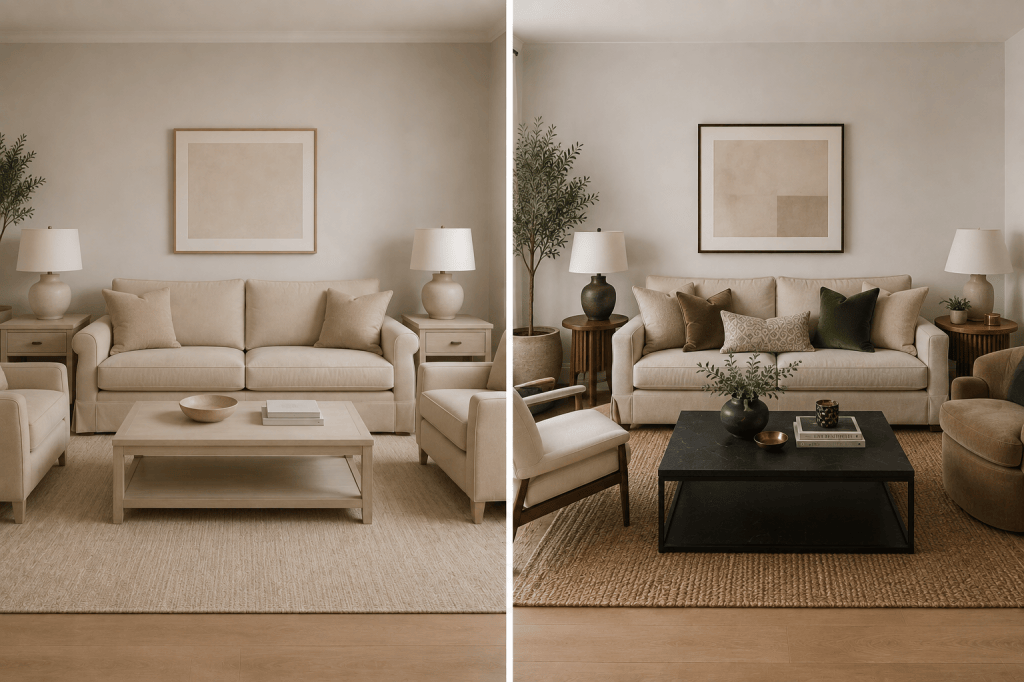
There was a time when buying the matching sofa, armchair, coffee table, side table and TV unit from the same furniture collection was considered the easiest way to decorate a room.
Today, it can often make a home feel more like a showroom than a space that developed naturally over time.
Current interiors are increasingly embracing a more collected-over-time aesthetic, mixing old and new pieces, different materials and objects with personality.
What to do instead
Mix materials and finishes.
Pair warm wood with chrome.
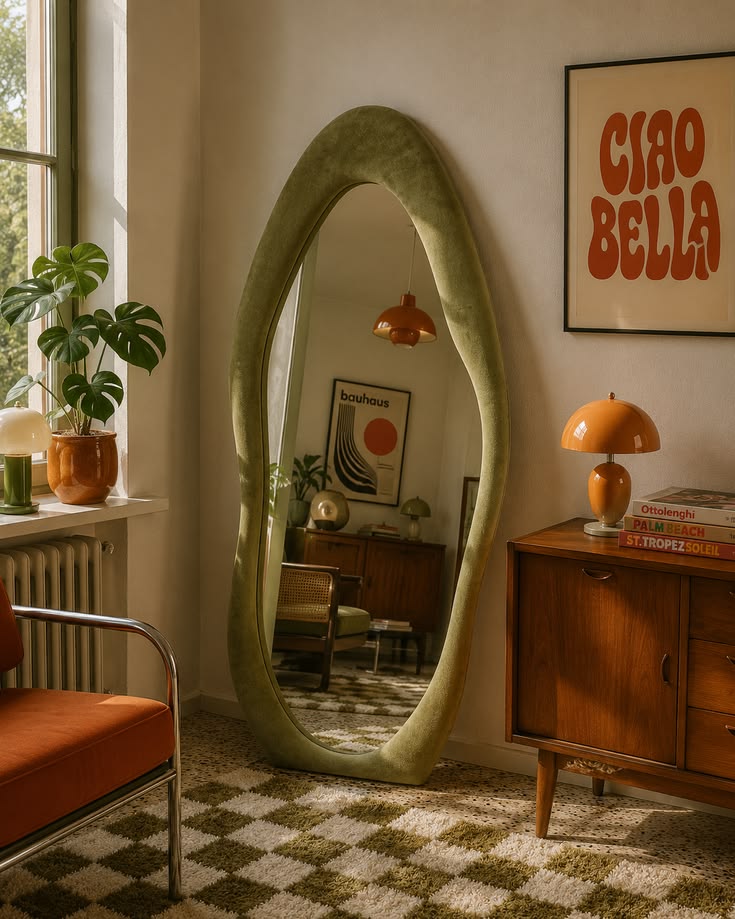
Combine a modern sofa with a vintage-inspired side table.
Place a glossy ceramic lamp beside a textured linen chair.
Mix new furniture with thrifted, vintage or handmade decor.
And don’t be afraid to mix metals.
Chrome, brass, stainless steel and darker metal accents can coexist beautifully when they’re repeated intentionally throughout the room.
The goal isn’t for everything to match.
The goal is for everything to belong together.
This layered approach creates a home that feels personal rather than copied directly from a furniture catalog.
6. All Your Decor Is the Same Height
You can have beautiful decor pieces and still feel like something isn’t quite right.
Often, the problem is simply scale and height.
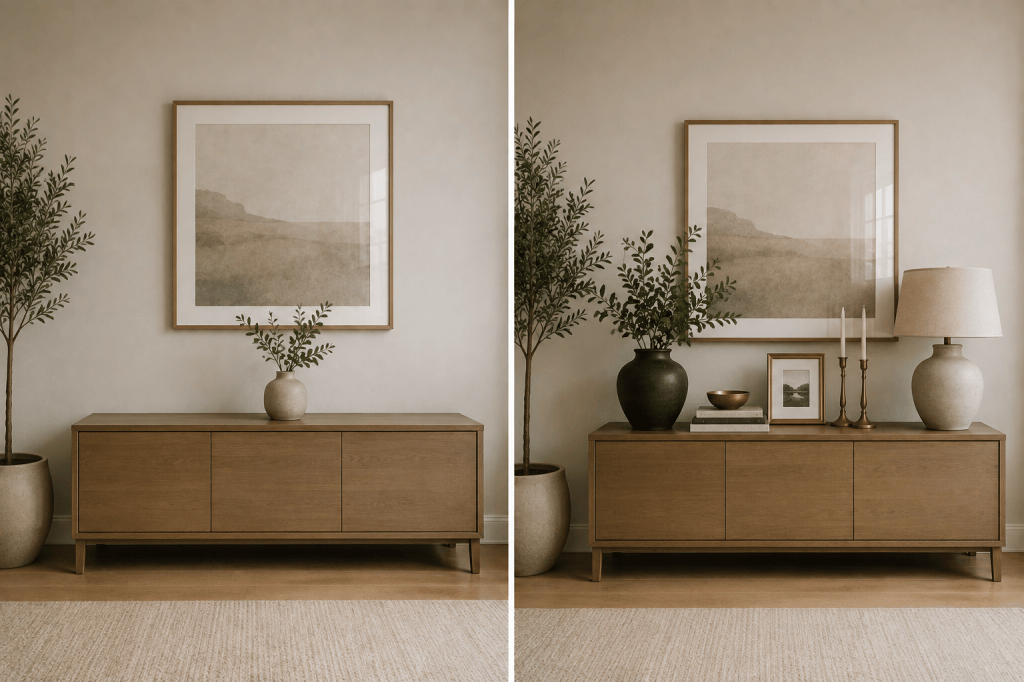
If every object on a shelf or console is roughly the same size, the arrangement can look flat.
What to do instead
Create different visual levels.
Combine something tall, something medium and something low.
For example, when styling a console table you could pair:
a tall lamp,
a medium-sized vase,
and a low decorative bowl or stack of books.
You can also layer objects in front of one another rather than arranging everything in a perfectly straight line.
The same principle works with pillows, plants, artwork and coffee table decor.
Variation creates movement.
And movement makes a space feel styled.
This is especially useful if you love cozy home decor or a more layered interior aesthetic, because it lets you add personality without making the room feel cluttered.
7. You’re Ignoring Scale and Proportion
Scale might be one of the least exciting interior design topics — but it makes an enormous difference.
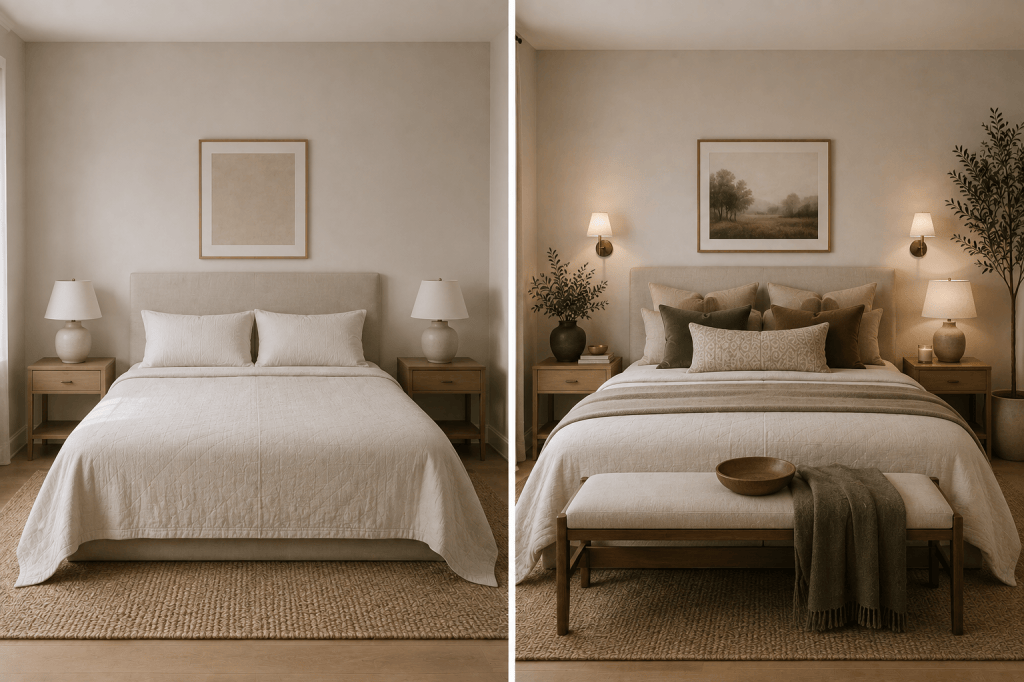
A tiny piece of artwork above a large sofa.
A miniature coffee table in front of an oversized sectional.
A very small pendant above a large dining table.
Individually, none of these pieces may be unattractive. They simply aren’t the right size for the space around them.
And when the proportions feel wrong, the whole room can feel slightly unfinished.
What to do instead
Before buying something, consider the furniture and architecture around it.
Large walls can usually handle larger artwork.
Large dining tables often need more substantial lighting.
Large sofas need coffee tables and rugs that visually hold their own beside them.
If you’re decorating a small room, this doesn’t mean everything needs to be tiny either.
In fact, using fewer, larger pieces can sometimes make a small space feel calmer and more spacious than filling it with lots of miniature furniture and accessories.
Oversized art is a perfect example.
One large piece above a sofa can create a much stronger focal point than several small pieces that don’t quite fill the wall.
How to Make Your Home Look More Expensive Without Buying Everything New
The biggest secret to creating an expensive-looking home is surprisingly simple:
Stop thinking about what you need to buy and start looking at how you’re styling what you already own.
Move your curtain rod higher.
Remove a few accessories from your shelves.
Rearrange your lamps.
Try your coffee table decor in groups of three.
Move furniture slightly closer together so the room feels more conversational.
Swap decor between different rooms.
Sometimes the best room makeover ideas don’t involve buying anything at all.
And if you do want to invest in something new, focus on pieces that make a noticeable difference to the entire room: a properly sized rug, beautiful lighting, oversized artwork, quality curtains or one statement decor piece.
A Beautiful Home Should Feel Collected, Not Perfect
The most interesting homes aren’t necessarily the ones following every interior design trend.
They’re the ones that feel personal.
A vintage vase found while traveling. A coffee table book you actually love. A slightly unexpected chrome lamp beside an old wooden cabinet. Artwork that means something to you.
In 2026, we’re seeing an even stronger move toward personalized interiors, vintage-meets-modern spaces, expressive color and collected decor rather than perfectly coordinated rooms. Pinterest’s current home trends reflect exactly that shift: people are increasingly looking for spaces with character, comfort and individuality.
So don’t worry about making your home look like everyone else’s.
Use interior styling rules as a starting point — and then break a few of them.
Because ultimately, an expensive-looking home isn’t about how much you spent.
It’s about creating a space that feels considered, layered and unmistakably yours.
Ready to Give Your Home a Little Refresh?
Creating a beautiful, expensive-looking home doesn’t require a complete renovation or an unlimited decorating budget. Sometimes, the smallest changes — a larger rug, better lighting, properly hung curtains or simply removing a few unnecessary accessories — can completely transform how a room feels.
Start with one space, look at what already works and make a few intentional changes before buying anything new. A home that feels elevated isn’t about following every trend or creating a picture-perfect interior. It’s about choosing pieces you love and learning how to style them in a way that feels balanced, collected and personal.
Looking for more inspiration? Explore more Casa Nore interior styling tips, home decor ideas and curated finds to help you create a home you truly love.
Which of these seven styling mistakes are you going to fix first?
Love,
Casa Nore



Leave a Reply